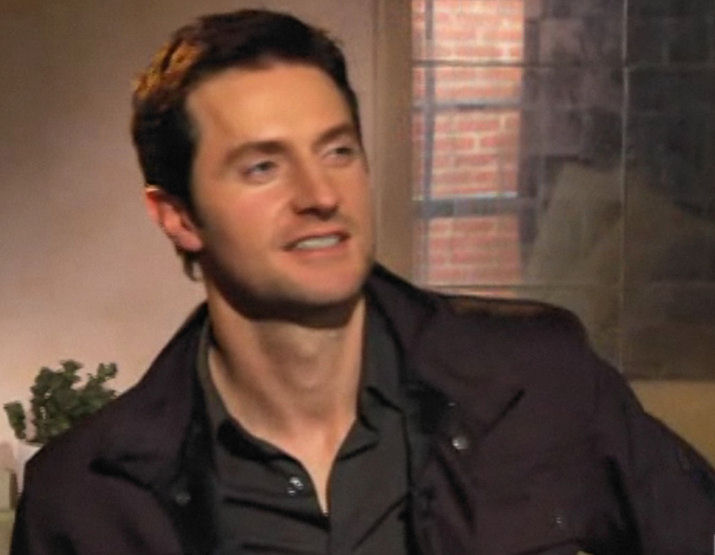
RA mentioned in a recent interview the possibility that he might appear in the following restoration comedy. Is there another libertine in Richard‘s professional future? The male lead is indeed another rake…
The Rover or The Banish'd Cavaliers is a play in two parts written by the English author Aphra Behn. It was a very popular Restoration comedy.
Behn had famously worked as a spy for Charles II against the Dutch. However, Charles was slow to pay her for her services and slow to meet his promises, if he ever paid her at all, and Behn sought to make money first with her poetry, and then with plays and novels. The Rover appeared on the stage in 1677, and it was popular enough that a second part appeared in 1681. The play appeared for a long run, enabling Behn to make a fair income from it (the author received the proceeds from the box office every third night the play ran).
The "rover" of the play's title is Willmore, a rake and naval captain, who falls in love with a young woman named Hellena, who has set out to experience love before her brother sends her to a convent. Complications arise when Angellica Bianca, a famous courtesan who falls in love with Willmore, swears revenge on him for his betrayal. In another plot, Hellena's sister Florinda attempts to marry her true love, Colonel Belvile, rather than the man her brother has selected. The third major plot of the play deals with the provincial Blunt, who becomes convinced that a girl has fallen in love with him but is humiliated when she turns out to be a prostitute and a thief.
Contemporary feminist scholars often focus on the play's many instances of women vulnerable to rape, and the tragic results of Angellica's being jilted by Willmore. They see in these plot elements a protest against the powerlessness of women in Behn's time.
Willmore (who may have been a parallel to Charles II or John Wilmot, 2nd Earl of Rochester) proved to be an extremely popular character, and four years later Behn wrote a sequel to the play. King Charles II was himself a fan of The Rover, and received a private showing of the play. http://en.wikipedia.org/wiki/The_Rover_%28play%29
~~~~~~~
http://thisgaudygildedstage.wordpress.com/category/restoration-and-18thc-sex/
~~~~~~~
Aphra Behn: still a radical example: Three and a half centuries on, the Restoration's Mae West makes many of today's women writers look distinctly genteel. Whenever Aphra Behn is written about, Virginia Woolf's entreaty is usually pulled out to act as the opening line: "All women together ought to let flowers fall upon the tomb of Aphra Behn, for it was she who earned them the right to speak their minds."
Behn had a few female contemporaries but, unlike her, they were aristocratic and certainly not doing anything as vulgar as writing for money. These hobbyist writers would also usually warn potential readers with a notice that the following work was written by a member of the "fair sex", as though apologising in advance. Aphra Behn made no such apologies. She did not ask for permission or acceptance - and it was because she did neither that she proved to be so popular among the ordinary playgoers whose opinion so often goes unrecorded. Operating with striking success outside gender conventions, it was she who paved the way for other women to do the same. What's more, she included as much wit and bawdiness as she could muster, along with a sharp insight into both sex and politics. She was the Restoration's very own combination of Dorothy Parker and Mae West.
...She had worked as a spy for King and country, served time in debtors' prison, and been called a slut as a writer, not just in her own time but by a whole series of (male) critics since. Here was a woman who did not just appease and beg to be allowed to write to earn a living.
On a previous blog on literary time travel, Aphra Behn was mentioned as someone whom it would be an adventure to visit. But what if we could bring her here, to the present, just for the day? What would she think of a traipse around the bookshops and the writing of noughties women; booksellers' tables groaning under the weight of pastel book covers that, far from defying convention and questioning and confronting, actually conform to the oldest patriarchal conventions? I'd like to think that her answer would be so bawdy and cutting that, even today, it would be unprintable.
http://www.guardian.co.uk/books/booksblog/2007/nov/13/aphrabehnstillaradicalexa
~~~~~~~~
The Rover - Southwark Playhouse, London: During the Restoration, the plays of Aphra Behn were as popular as those of Wycherley and Congreve. Now they are often perceived as curiosities despite Virginia Woolf's assertion that: "All women together ought to let flowers fall upon the tomb of Aphra Behn‚ for it was she who earned them the right to speak their minds."
Review: The Rover - Southwark Playhouse - London
The women in The Rover use the carnival in Venice as an opportunity to win their heart's desire. Helena, whose brother has decided that she must enter a nunnery, dresses up as a Gypsy and then a page to win the love of the rover of the title, the philandering Willmore. Her sister, Florinda, defies her father and brother to marry the man she loves. It is an astonishing play for a woman to have written at that time, although there are limits to the women's agency: the courtesan Angellica remains a loser in this game of love and money, and you wonder how these lively women will fare within the confines of marriage. Behn wrote out of need, not because she was some kind of 17th-century proto-feminist, and her plays reflect the society of the time.
It would be good, however, to see a production of one of Behn's plays that subverts 17th-century theatrical and social convention, rather than playing to it. This isn't that production, although Naomi Jones's production has charm and freshness, particularly in the early intimate scenes that are played in the theatre's galleried bar area. Once in the theatre, the show never quite recovers its momentum, and the long traverse staging is hard on the audience and actors, many of whom do not have the technique to deal with the noise and a space that leeches energy.
http://www.guardian.co.uk/stage/2009/jul/09/the-rover-review
~~~~~~~
Synopsis: In a collaboration between the BBC and the Women's Playhouse Trust, this is an opportunity to see the stage production of Aphra Behn's restoration comedy on video. The play chronicles the adventures and misadventures of a group of British cavalier mercenaries in Naples at carnival time. A robust, dynamic and sometimes brutal look at relationships, sexual desires and sexual favours.
http://www.waterstones.com/waterstonesweb/products/aphra+behn/the+rover/4157974/

Showing posts sorted by relevance for query the rover. Sort by date Show all posts
Showing posts sorted by relevance for query the rover. Sort by date Show all posts
April 21, 2010


August 19, 2010
Richard Armitage: A Possible Play - First Posted April 22, 2010


Thursday, April 22, 2010 - Richard Armitage as a Cavalier?? Quotes from RA on the topic...
http://www.questia.com/googleScholar.qst;jsessionid=LQJccq1fq2JM71vMWfvvCTpg26vtkp0ypvFyZTWTwvVcyJkxqZhn!-937560419!253925131?docId=5007672641
Magazine article by Lucy Worsley; History Today, Vol. 54, September 2004
Excerpt See below...
Reining Cavaliers: Lucy Worsley Discusses the Importance of the Art and Discipline of Horsemanship to the Men Who Became Known as the Cavaliers..........by Lucy Worsley
EVERYBODY HAS A MENTAL picture of the Cavaliers, the gorgeously-dressed supporters of Charles I. We see them through the eyes of Sir Anthony Van Dyck, as his portraits of the aristocrats of the Stuart court suggest a coherent group linked by their clothes, behaviour and ideology. However, the technical art of horsemanship from which they take their popular name is not widely understood. Manege, or the art of teaching horses to dance, was a spec tator sport requiring high expenditure and enormous specially-built riding houses, some of which survive to this day. Manege had a political significance that goes beyond its image as courtly pastime. Horsemanship was seen as a metaphor for the self-control of passion necessary for a courtier to make a graceful appearance in a life where an audience was never absent.
The popular impression of a Cavalier has as much to do with his clothes, courtesy and King Charles spaniels as it does with his politics. Macaulay described the 'courtesy, generosity, veracity, tenderness and respect for women' of the courtiers of Charles I. The group we call today the Cavalier poets--Richard Lovelace, Andrew Marvell and John Suckling--were a literary set writing about love and loyalty. They took an enthusiastic but informal "cavalier' attitude towards life. combining sensitivity and versatility with a love of beauty. 'To Amarantha, That She Would Dishevel Her Hair' is a title by Richard Lovelace, while Andrew Marvell pondered on 'The Definition of Love'. The careless, stylish arrogance of courtly Cavaliers such as the dashing Prince Rupert of the Rhine, seems all the more romantic if their later losses and sufferings are considered: many died on the battlefields of the first Civil War or in continental exile.
The term 'Cavalier' was originally one of abuse. It began to appear in the late 1630s, and came into common currency in about 1641 as the Civil War became imminent. It was widely used in Parliamentarian propaganda, along with the term 'Royalist' which was coined in 1643. Both sides sought to simplify the complicated conflicts of the Civil War by calling each other rude names. However, it has been many years since historians have seen the English Civil Wars as struggles between well-delineated parties of courtly Cavaliers versus Roundheads, opposing each other across a clearly defined ideological divide. Politically speaking, the Cavalier party did not exist, and the term is just a shorthand for a set of shared social attitudes.
Yet the horsemanship from which the Cavaliers take their soubriquet was more than a useful skill on the battlefield or an enjoyable one for the hunting field. It also included the more specialised art of manage (or 'mannage' as it was known in England), ancestor of the modern sport of dressage. After daily arduous training, the true seventeenth-century Cavalier's great horse could perform the astounding manoeuvres of an ariel ballet, the 'airs above the ground' (still practised by the white stallions of the Spanish Riding School in Vienna).
The greatest Cavalier of all was William Cavendish (1593-1676), Marquess (and from 1665, 1st Duke) of Newcastle. He perfectly matches the Cavalier's popular image: courageous, cultured, generous and doomed to failure in battle, He loved both the arts and women so much that his enemies criticised him for 'fornicating with the Nine Muses, or the Dean of York's daughters' when he should have been lighting during the Civil War. He impressed the Stuart court with his horsemanship, taught the future Charles II to ride and was general of the King's army in the north when war broke out. Famously defeated at the battle of Marston Moor in 1644, he spent the next fifteen years in continental exile. Here he married the remarkable Margaret Lucas, better known as the writer Margaret Cavendish. Samuel Pepys summed her up by saying 'the whole story of this lady is a romance, and all she doth is romantic'. He described 'her footmen in velvet coats, and herself in an antique dress' while John Evelyn, less sympathetically, found her dress so extravagant that 'She looked so like a Cavalier, But that she had no beard'.
In 1660, William and Margaret Cavendish returned to England in triumph at the restoration of William's former pupil, now Charles II, to the throne. Read this entire Magazine Article and more with a FREE trial.
~~~~~~~~~~~
From Stage Magazine, link below : Spooks star Armitage plans return to stage
Published Thursday 22 April 2010 at 11:52 by Matthew Hemley
Spooks actor Richard Armitage is set to return to the theatre after a hiatus of almost a decade, with plans for the performer to appear in a new production of Restoration comedy The Rover.
Armitage, who started his career in theatre, made his last major appearance on stage in the Royal Shakespeare Company’s 2000/1 production of The Duchess of Malfi at the Barbican.
He subsequently took part in a rehearsed reading of a new play presented by the Operating Theatre Company in 2002, but has spent the last eight years focused on television.
Armitage is now hoping to make a return to the theatre and he told The Stage he was particularly keen to do some comedy, because his most recent roles have seen him appear in action-based TV dramas, such as Spooks and Robin Hood. His latest is the Sky One series Strike Back, which is based on Chris Ryan’s book.
The LAMDA-trained actor said he wanted to have a “bit more of a laugh” and revealed that one of the options he is considering is a new production of Aphra Behn’s The Rover.
He said: “I did it at drama school and it’s something that has come back on the horizon for me. It would be a great big bawdy romp through a carnival, with lots of sex and naughtiness. It would be very different for me.”
The actor revealed that the production is in the “early stages of development” and added he was looking to take a theatre role when the ninth series of Spooks finishes recording in July.
However, he ruled out an imminent return to musical theatre, where he started before his professional training at LAMDA. He said: “Things do come up occasionally, but I have not quite explored enough of classical theatre. And there are so many things I would like to do before I go back to it [musical theatre].”
http://www.thestage.co.uk/news/newsstory.php/27965/exclusive-spooks-star-armitage-plans-return
******
Above was followed in April by this post entitled "Does RA Have an Affinity for Rakish Roles?"
http://allthingsrarmitage.blogspot.com/search?q=aphra+behn%27s+the+rover
http://allthingsrarmitage.blogspot.com/search/label/interview
RA mentioned in a recent interview the possibility that he might appear in the following restoration comedy. Is there another libertine in Richard‘s professional future? The male lead is indeed another rake…
The Rover or The Banish'd Cavaliers is a play in two parts written by the English author Aphra Behn. It was a very popular Restoration comedy.
Behn had famously worked as a spy for Charles II against the Dutch. However, Charles was slow to pay her for her services and slow to meet his promises, if he ever paid her at all, and Behn sought to make money first with her poetry, and then with plays and novels. The Rover appeared on the stage in 1677, and it was popular enough that a second part appeared in 1681. The play appeared for a long run, enabling Behn to make a fair income from it (the author received the proceeds from the box office every third night the play ran).
The "rover" of the play's title is Willmore, a rake and naval captain, who falls in love with a young woman named Hellena, who has set out to experience love before her brother sends her to a convent. Complications arise when Angellica Bianca, a famous courtesan who falls in love with Willmore, swears revenge on him for his betrayal. In another plot, Hellena's sister Florinda attempts to marry her true love, Colonel Belvile, rather than the man her brother has selected. The third major plot of the play deals with the provincial Blunt, who becomes convinced that a girl has fallen in love with him but is humiliated when she turns out to be a prostitute and a thief.
Contemporary feminist scholars often focus on the play's many instances of women vulnerable to rape, and the tragic results of Angellica's being jilted by Willmore. They see in these plot elements a protest against the powerlessness of women in Behn's time.
Willmore (who may have been a parallel to Charles II or John Wilmot, 2nd Earl of Rochester) proved to be an extremely popular character, and four years later Behn wrote a sequel to the play. King Charles II was himself a fan of The Rover, and received a private showing of the play. http://en.wikipedia.org/wiki/The_Rover_%28play%29
~~~~~~~
http://thisgaudygildedstage.wordpress.com/category/restoration-and-18thc-sex/
~~~~~~~
Aphra Behn: still a radical example: Three and a half centuries on, the Restoration's Mae West makes many of today's women writers look distinctly genteel. Whenever Aphra Behn is written about, Virginia Woolf's entreaty is usually pulled out to act as the opening line: "All women together ought to let flowers fall upon the tomb of Aphra Behn, for it was she who earned them the right to speak their minds."
Behn had a few female contemporaries but, unlike her, they were aristocratic and certainly not doing anything as vulgar as writing for money. These hobbyist writers would also usually warn potential readers with a notice that the following work was written by a member of the "fair sex", as though apologising in advance. Aphra Behn made no such apologies. She did not ask for permission or acceptance - and it was because she did neither that she proved to be so popular among the ordinary playgoers whose opinion so often goes unrecorded. Operating with striking success outside gender conventions, it was she who paved the way for other women to do the same. What's more, she included as much wit and bawdiness as she could muster, along with a sharp insight into both sex and politics. She was the Restoration's very own combination of Dorothy Parker and Mae West.
...She had worked as a spy for King and country, served time in debtors' prison, and been called a slut as a writer, not just in her own time but by a whole series of (male) critics since. Here was a woman who did not just appease and beg to be allowed to write to earn a living.
On a previous blog on literary time travel, Aphra Behn was mentioned as someone whom it would be an adventure to visit. But what if we could bring her here, to the present, just for the day? What would she think of a traipse around the bookshops and the writing of noughties women; booksellers' tables groaning under the weight of pastel book covers that, far from defying convention and questioning and confronting, actually conform to the oldest patriarchal conventions? I'd like to think that her answer would be so bawdy and cutting that, even today, it would be unprintable.
http://www.guardian.co.uk/books/booksblog/2007/nov/13/aphrabehnstillaradicalexa
~~~~~~~~
The Rover - Southwark Playhouse, London: During the Restoration, the plays of Aphra Behn were as popular as those of Wycherley and Congreve. Now they are often perceived as curiosities despite Virginia Woolf's assertion that: "All women together ought to let flowers fall upon the tomb of Aphra Behn‚ for it was she who earned them the right to speak their minds."
Review: The Rover - Southwark Playhouse - London
The women in The Rover use the carnival in Venice as an opportunity to win their heart's desire. Helena, whose brother has decided that she must enter a nunnery, dresses up as a Gypsy and then a page to win the love of the rover of the title, the philandering Willmore. Her sister, Florinda, defies her father and brother to marry the man she loves. It is an astonishing play for a woman to have written at that time, although there are limits to the women's agency: the courtesan Angellica remains a loser in this game of love and money, and you wonder how these lively women will fare within the confines of marriage. Behn wrote out of need, not because she was some kind of 17th-century proto-feminist, and her plays reflect the society of the time.
It would be good, however, to see a production of one of Behn's plays that subverts 17th-century theatrical and social convention, rather than playing to it. This isn't that production, although Naomi Jones's production has charm and freshness, particularly in the early intimate scenes that are played in the theatre's galleried bar area. Once in the theatre, the show never quite recovers its momentum, and the long traverse staging is hard on the audience and actors, many of whom do not have the technique to deal with the noise and a space that leeches energy.
http://www.guardian.co.uk/stage/2009/jul/09/the-rover-review
~~~~~~~
Synopsis: In a collaboration between the BBC and the Women's Playhouse Trust, this is an opportunity to see the stage production of Aphra Behn's restoration comedy on video. The play chronicles the adventures and misadventures of a group of British cavalier mercenaries in Naples at carnival time. A robust, dynamic and sometimes brutal look at relationships, sexual desires and sexual favours.
http://www.waterstones.com/waterstonesweb/products/aphra+behn/the+rover/4157974/
November 26, 2010
Wm Blake Coin*k*idence Discovered by Musa + READTHROUGH!! Reported on Twitter + Sylvester review + Amelie


Will the cavalier Willmore look anything like..


Apparently 'The Rover' is a go according to a tweet by the production company and retweeted by RA_ Central 1 hour ago Favorite Retweet Reply »
ETTtweet ETT: by RA_Central
Great read-through of The Rover with Richard Armitage yesterday! Positive feed back and things are looking good! 4 hours ago Favorite Retweet Reply »
****
RA_Central RA Central - Lovely review of Richard Armitage's reading of Georgette Heyer's Sylvester audiobook. http://bit.ly/eU3h18
24 Nov Favorite Retweet Reply
****
Historical background of the play and it's lightyears-ahead-of-her-time female writer: http://allthingsrarmitage.blogspot.com/search?q=the+rover
One item at the above link: From Stage Magazine, link below : Spooks star Armitage plans return to stage
>Published Thursday 22 April 2010 at 11:52 by Matthew Hemley
Spooks actor Richard Armitage is set to return to the theatre after a hiatus of almost a decade, with plans for the performer to appear in a new production of Restoration comedy The Rover.
Armitage, who started his career in theatre, made his last major appearance on stage in the Royal Shakespeare Company’s 2000/1 production of The Duchess of Malfi at the Barbican.
He subsequently took part in a rehearsed reading of a new play presented by the Operating Theatre Company in 2002, but has spent the last eight years focused on television.
Armitage is now hoping to make a return to the theatre and he told The Stage he was particularly keen to do some comedy, because his most recent roles have seen him appear in action-based TV dramas, such as Spooks and Robin Hood. His latest is the Sky One series Strike Back, which is based on Chris Ryan’s book.
The LAMDA-trained actor said he wanted to have a “bit more of a laugh” and revealed that one of the options he is considering is a new production of Aphra Behn’s The Rover.
He said: “I did it at drama school and it’s something that has come back on the horizon for me. It would be a great big bawdy romp through a carnival, with lots of sex and naughtiness. It would be very different for me.”
The actor revealed that the production is in the “early stages of development” and added he was looking to take a theatre role when the ninth series of Spooks finishes recording in July.
However, he ruled out an imminent return to musical theatre, where he started before his professional training at LAMDA. He said: “Things do come up occasionally, but I have not quite explored enough of classical theatre. And there are so many things I would like to do before I go back to it [musical theatre].”<
http://www.thestage.co.uk/news/newsstory.php/27965/exclusive-spooks-star-armitage-plans-return
In observance of William Blake's birthday, US film critic Roger Ebert (at his journal) listed some of Blake's work. The coincidence is his first choice of paintings...
http://blogs.suntimes.com/ebert/poetry/william-blake.html
Some other Ebert selections are listed on right sidebar, including 2 Brit comics doing their Michael Caine impressions....hilarious!
****
Tweeted by middleearthminutes..

****
Am I the only one in the world who had not until the past few days stumbled upon this sweet, funny and oh so true film - Amelie? Adorable love story..
April 22, 2010
Richard Armitage as a Cavalier?? Quotes from RA on the topic...

Magazine article by Lucy Worsley; History Today, Vol. 54, September 2004
Excerpt See below...
Reining Cavaliers: Lucy Worsley Discusses the Importance of the Art and Discipline of Horsemanship to the Men Who Became Known as the Cavaliers..........by Lucy Worsley
EVERYBODY HAS A MENTAL picture of the Cavaliers, the gorgeously-dressed supporters of Charles I. We see them through the eyes of Sir Anthony Van Dyck, as his portraits of the aristocrats of the Stuart court suggest a coherent group linked by their clothes, behaviour and ideology. However, the technical art of horsemanship from which they take their popular name is not widely understood. Manege, or the art of teaching horses to dance, was a spec tator sport requiring high expenditure and enormous specially-built riding houses, some of which survive to this day. Manege had a political significance that goes beyond its image as courtly pastime. Horsemanship was seen as a metaphor for the self-control of passion necessary for a courtier to make a graceful appearance in a life where an audience was never absent.
The popular impression of a Cavalier has as much to do with his clothes, courtesy and King Charles spaniels as it does with his politics. Macaulay described the 'courtesy, generosity, veracity, tenderness and respect for women' of the courtiers of Charles I. The group we call today the Cavalier poets--Richard Lovelace, Andrew Marvell and John Suckling--were a literary set writing about love and loyalty. They took an enthusiastic but informal. "cavalier' attitude towards life. combining sensitivity and versatility with a love of beauty. 'To Amarantha, That She Would Dishevel Her Hair' is a title by Richard Lovelace, while Andrew Marvell pondered on 'The Definition of Love'. The careless, stylish arrogance of courtly Cavaliers such as the dashing Prince Rupert of the Rhine, seems all the more romantic if their later losses and sufferings are considered: many died on the battlefields of the first Civil War or in continental exile.
The term 'Cavalier' was originally one of abuse. It began to appear in the late 1630s, and came into common currency in about 1641 as the Civil War became imminent. It was widely used in Parliamentarian propaganda, along with the term 'Royalist' which was coined in 1643. Both sides sought to simplify the complicated conflicts of the Civil War by calling each other rude names. However, it has been many years since historians have seen the English Civil Wars as struggles between well-delineated parties of courtly Cavaliers versus Roundheads, opposing each other across a clearly defined ideological divide. Politically speaking, the Cavalier party did not exist, and the term is just a shorthand for a set of shared social attitudes.
Yet the horsemanship from which the Cavaliers take their soubriquet was more than a useful skill on the battlefield or an enjoyable one for the hunting field. It also included the more specialised art of manage (or 'mannage' as it was known in England), ancestor of the modern sport of dressage. After daily arduous training, the true seventeenth-century Cavalier's great horse could perform the astounding manoeuvres of an ariel ballet, the 'airs above the ground' (still practised by the white stallions of the Spanish Riding School in Vienna).
The greatest Cavalier of all was William Cavendish (1593-1676), Marquess (and from 1665, 1st Duke) of Newcastle. He perfectly matches the Cavalier's popular image: courageous, cultured, generous and doomed to failure in battle, He loved both the arts and women so much that his enemies criticised him for 'fornicating with the Nine Muses, or the Dean of York's daughters' when he should have been lighting during the Civil War. He impressed the Stuart court with his horsemanship, taught the future Charles II to ride and was general of the King's army in the north when war broke out. Famously defeated at the battle of Marston Moor in 1644, he spent the next fifteen years in continental exile. Here he married the remarkable Margaret Lucas, better known as the writer Margaret Cavendish. Samuel Pepys summed her up by saying 'the whole story of this lady is a romance, and all she doth is romantic'. He described 'her footmen in velvet coats, and herself in an antique dress' while John Evelyn, less sympathetically, found her dress so extravagant that 'She looked so like a Cavalier, But that she had no beard'.
In 1660, William and Margaret Cavendish returned to England in triumph at the restoration of William's former pupil, now Charles II, to the throne. Read this entire Magazine Article and more with a FREE trial.
~~~~~~~~~~~
From Stage Magazine, link below : Spooks star Armitage plans return to stage
Published Thursday 22 April 2010 at 11:52 by Matthew Hemley
Spooks actor Richard Armitage is set to return to the theatre after a hiatus of almost a decade, with plans for the performer to appear in a new production of Restoration comedy The Rover.
Armitage, who started his career in theatre, made his last major appearance on stage in the Royal Shakespeare Company’s 2000/1 production of The Duchess of Malfi at the Barbican.
He subsequently took part in a rehearsed reading of a new play presented by the Operating Theatre Company in 2002, but has spent the last eight years focused on television.
Armitage is now hoping to make a return to the theatre and he told The Stage he was particularly keen to do some comedy, because his most recent roles have seen him appear in action-based TV dramas, such as Spooks and Robin Hood. His latest is the Sky One series Strike Back, which is based on Chris Ryan’s book.
The LAMDA-trained actor said he wanted to have a “bit more of a laugh” and revealed that one of the options he is considering is a new production of Aphra Behn’s The Rover.
He said: “I did it at drama school and it’s something that has come back on the horizon for me. It would be a great big bawdy romp through a carnival, with lots of sex and naughtiness. It would be very different for me.”
The actor revealed that the production is in the “early stages of development” and added he was looking to take a theatre role when the ninth series of Spooks finishes recording in July.
However, he ruled out an imminent return to musical theatre, where he started before his professional training at LAMDA. He said: “Things do come up occasionally, but I have not quite explored enough of classical theatre. And there are so many things I would like to do before I go back to it [musical theatre].”
http://www.thestage.co.uk/news/newsstory.php/27965/exclusive-spooks-star-armitage-plans-return
January 13, 2012
Director Michael Mann Mentions 'Agincourt' + Yet Again, Truth is More Interesting Than Fiction(see review of Recent Golden Globes) + Historical Fiction or Fantasy? A Chat Between Bernard Cornwell & GRR Martin + Richard Armitage: Recent Interview in Full + Vote for Unexpected Journey in MTV's 2012 Movie Brawl


Director Michael Mann mentions at the end of this recent interview that he wants to make medieval film, Cornwell's 'Agincourt'

Did you ever read something that explained to you exactly why you had had an unsettled feeling about someone or something and couldn't exactly identify why? That's what happened as I read the following review of last night's Golden Globe awards. First, the only awards show I watch is The Oscars, therefore, I’ve never had reason to become aware of the recent host of the Golden Globe awards(last year's and last night). As a result, I didn’t realize he had skewered most of Hollywood during last year’s show. Woe is me that I missed that golden moment in time, because most of what the following reviewer says about ‘Hollywood types’ echoes my opinions of that irrelevant community. The reviewer is right on about speculating that Meryl Streep’s agent/producer/pusher is buying all these awards for her. Neither the woman, nor her dramatic vehicles, are interesting enough to merit so much attention - unless it has been manufactured in the first place. Box office results for her films definitely confirm that conclusion. IMHO, the only audience watching her movies - and the majority of others out of Hollywood - are the members of the Motion Picture Academy Arts and Sciences themselves (those earning their living in LaLaLand).
EXCERPT from review: ”..That must be what all the stars were promised this time around: ‘You can use Ricky this time as your punching bag’, and NBC guaranteed it won’t be the other way around.”
BEST PERFORMANCE BY AN ACTRESS IN A MOTION PICTURE – DRAMA
MERYL STREEP – THE IRON LADY
Seriously? Another win for The Weinstein Co? What did Harvey do: get every member of the HFPA green cards and/or permanent U.S. citizenship? (Well, he is a bundler for the Democratic party/Obama re-election campaign.) This is a movie that many Britons hated (not unlike Madonna’s W.E.) Shouldn’t that make it an anathema to the foreign press? Nope. “I want to thank everybody in England who let me trample all over their history,” Streep said.
Meryl wasn’t just joking when she thanked “my agent Kavein Huvane and God — Harvey Weinstein. The Punisher. Old Testament, I guess.” Harvey tried to act humble. Still, it’s an astonishing night for him. Two years ago he was down and out. Now he’s The Don again. The fact is he’s just so much better than other moguls at seducing these awards voters and swanning the clueless media.
http://www.deadline.com/2012/01/advisory-live-snarking-the-golden-globes/

In a comment by Sally, she speculates that RA could perhaps finally appear in the play 'The Rover' during his filming break from The Hobbit - last half of 2012. Scroll to end of page for specific posts on The Rover..

MTV: The Ones to Watch Interview
This winter, director Peter Jackson will deliver the long-awaited return to Middle-earth. "The Hobbit," which will unfold across two films, begins with "An Unexpected Journey," as Bilbo Baggins leaves to win back gold stolen from his companions. But these are not just any friends. Bilbo is accompanied by 13 dwarves, each with a larger-than-life personality.
The leader of these adventurers, Thorin, will be played by Richard Armitage, who made a brief appearance in "Captain America: The First Avenger," but will get his biggest Stateside break in "The Hobbit." The British actor played a key role in last month's trailer and will soon join the illustrious ranks of Tolkien alumni, alongside Viggo Mortensen, Sean Bean and Orlando Bloom.
We spoke with Armitage about traveling to Middle-earth, the difficulty of working under pounds of makeup and leading a band of treasure-seeking dwarves.
MTV: Congratulations on being named to MTV's Ones to Watch!
Richard Armitage: Thank you very much!
MTV: Where are you currently in the filming schedule?
Armitage: We just finished up our second block, so we start again at the end of January, and then we go — we think it's the end of July. Then there's a bit more in 2013, we reckon.
MTV: What's it like being on a single project for so long?
Armitage: It's really weird because when we started it was just this enormous mountain to climb, but actually, it's going so fast. I think we've gotten to the halfway point now. It's been really intense but so exciting. We literally just finished our location shoot that we've been out on the road seeing most of New Zealand. It's been the best thing I've ever worked on in my life, by far.
MTV: Is it easy to forget you're acting? Do you get lost in the world the production creates?
Armitage: The soundstages they made in Wellington, [New Zealand], most of the time it doesn't feel like we've been working on a set. Even when there's a green screen there, Peter's vision of it is so clear and his description of it is so clear. The pre-production CGI that they've already created really fires up your imagination. That was the shoot we started with. On location, it's just theirs to program these amazing images into your head, so we can now take them back into the studio.
MTV: Will it be hard to leave behind once you've wrapped?
Armitage: It don't think it will be possible to leave it behind me. I think this is one of those characters that always stay with you because you spend so much time with him and it's such a transformation. I'm in the character every day, and I've become so familiar with him. I sort of know how he thinks. I feel really close to the character, and he will continue beyond this job , [spoiler ahead] even though, he dies at the end of the movie. I think he is a fascinating character. I will probably wake up in six years' time and be inspired to think about him again. It's really exciting.
MTV: How did your previous knowledge of the story change how you approached Thorin?
Armitage: I read it quite a few times when I was young. I think going back to it as an adult is really interesting because it is a book that was, I think, was written for Tolkien's children, but when you're creating a piece on this scale, you have to really visualize it for a much broader audience. I think that's the beauty of Tolkien. He does create very well-rounded, quite dangerous characters to play his protagonists. He risks scaring kids. He's the original fantasy creator, and I think you have to invest those characters with the same gravity as if you were making a piece for adults. It was interesting coming back to it as an adult, re-reading it again, because it did have a simplicity to it, which I really like. I felt we could take those characters and really develop them beyond the book.
MTV: You ended up with middle ground in terms of the amount of makeup. Did you feel lucky?
Armitage: It did evolve. We all started with quite an extreme version of ourselves. I think because my character does spend a lot of time onscreen and you really have to understand what he's going through emotionally, it became clear that if we started make the prosthetic as close to my features as possible but still make him a dwarf, it would be much easier to read the character. He has to go on such a journey, it was really important to do that. I grew my own beard after the first block because I felt that it was restricting my face. The jaw is so connected to emotion that I wanted to have that free. It made such a huge difference.
It's really weird now because I can't play the character when I haven't gotten everything on. It's very hard to rehearse when you're not in costume, when you haven't gotten the prosthetics on, but I look in the mirror when it's all finished and I don't see it. I can't see where it starts and where it ends. I just see the character. I've never had that before. It's such a unique experience. It's a face that doesn't belong to me. It belongs to WETA workshop and the people that created it.
MTV: How was it on set with so many actors playing the dwarves?
Armitage: I love it. I absolutely love working as an ensemble member, and we really are an ensemble. There's great camaraderie among all the guys. There is such a diversity of culture and background. We're working with a lot of Kiwis, and there's real mixture of British actors who come from television and theater and film. It's exactly as the dwarves are. When Thorin assembles the quest, he pulls dwarves from all different places to go on this quest. That's mirrored in who we are as actors.
Oh No! They've paired An Unexpected Journey with Daniel Radcliffe's Woman in Black - Current Results:
The Hobbit: An Unexpected Journey 50.88% V O T E !
The Woman In Black 49.12%
http://moviesblog.mtv.com/tag/mtv-movie-brawl-2012/
Will we allow the boy wizard to steal Thorin's thunder? Of course not ;) VOTE at link above


For many years, I've so admired Bernard Cornwell's respect for historical facts in his writing; therefore, it was gratifying to read the following excerpt during a discussion between the Lords of the North writer and Game of Thrones author, GRR Martin. As a history buff, I cannot muster as much respect for fantasy pieces as for historical fiction/drama. That's probably because the creative guidelines are much looser - there's no need to keep within the truthful framework that I, for one, find commendable in well written historical novels and drama.
http://georgerrmartin.com/news.html
EXCERPT: GRRM: Historical fiction is not history. You're blending real events and actual historical personages with characters of your own creation, like Uhtred and Richard Sharpe. How much "poetic license" should a novelist have when dealing with the events of history? How accurate is he obliged to be? Where do you draw the line?
BC: I can't change history (if only), but I can play with it. The answer slightly depends on what I'm writing. I did a trilogy on 'King' Arthur and there's almost no real history to rely on, so I could do more or less what I wanted. With the Saxon books I have a skeleton history thanks to the Anglo-Saxon Chronicle and few other sources, but there's not much meat on those bones so I have a lot of freedom. If I'm writing about the American Revolution then I have almost no freedom because I'm trespassing on the high ground of American legend and I must stick to the real history if the book is going to persuade the reader of the story's viability - so in Redcoat I changed only one event by bringing it forward 24 hours. And then I confess my sins in an historical note at the book's end. Occasionally I change more drastically; Sharpe's Company tells the story of the dreadful attack on Badajoz and, in brief, a feint attack that was only intended to draw French defenders away from the breaches succeeded in capturing the city while the main attacks, on the breaches, failed disastrously. It seemed to me that the drama of that night was in the breaches, so Sharpe had to attack one of them, and if Richard Sharpe attacks, he wins (he's a hero!). So in the novel I allow the attackers to get through a breach (which didn't happen) because otherwise the story wouldn't work. But again, I confessed the sin at the book's end.
** Cornwell also mentions in above chat that a Uhtred tv series might be a possibility, although he added he's not holding his breath.

FOUND IT ON TWITTER
During an interview RA has said his favorite city is Rome - the Eternal City
http://www.journeywoman.com/girltalk/italy/italy_rome.html
http://www.journeywoman.com/girltalk/paris/MyParisFromaWomansPointofView.htm

December 16, 2010
Guy2 Leads in Poll..G&M Quotes in The Heart Asks Pleasure First + Best Version of A Christmas Carol:) + RA Reads Night Watch for England + Etext for The Rover + Richard Joins faboamanto for Percy's Tango + A Christmas Carol in 4Min + John Thornton Vid + Flashback: Christmas 09


My favorite scene--every year write on DH's gift card "to Mr Fezziwig"
"something I et"
*****
Guy & Marian RHII quotes in The Heart Asks Pleasure First by PioggiaNelVento..


Just when I was starting to miss watching at least a few couples each week on Dancing with the Stars, along comes faboamanto to the rescue with Percy's Tango -- Very appropriate especially when we consider RA has said that the Argentine Tango is his favorite dance...
No doubt these 2 spooks are working on a top secret mission...

From the Dec 12, 2009 post...
C - Crispin...his middle name
H - Harry Kennedy...the role he said is most similar to his RL personality
R - Richard III...his dream
I - Inimitable Dramatic Flare
S - Sweet Personality
T - Truly Talented
M - Manly Demeanor
A - Armitage Tallness Gene--US's Richard Armitage(politician) is 6' 6"
S - Stunning Speaking Voice
0 - No Negatives--other than the fact there's only one of him. Cloning??
9 - The Next Spooks Series.....pretty please G_d:)
(Dec 16, 2010...and so it came to pass - Spooks9 that is)
*****
Just read the political opinions of someone who apparently lacks the enlightened insight I was ready to believe he espoused. Won't enjoy reading his work nearly as much now that I realize the sum of all his parts doesn't add up to anywhere near what I'd hoped.
An excerpt from a poem he used while airing frustrations with the current political landscape..
>The best lack all conviction, while the worst
Are full of passionate intensity.< (from a poem by Yeats)
The person's interpretation of the above Yeats line is exactly opposite from the reality of the situation. Which is, that the best have finally risen to the crucial occasion and applied their noble convictions to the sticking stone, while the worst have lost their once passionate intensity due to their extremely faulty and thereby unworkable political philosophy and beliefs. It's really difficult to enjoy the writings of someone for whom you've lost respect, because they've proven themselves to be simply another boring, indoctrinated liberal robot. Fortunately, for every writer who once promised depth and wisdom there is always another holding high the torch of independent thinking with integrity and truth.
****
UPDATE: Filed under life can be weirder than fiction:
About 6mos ago I'd sent a private message to writer Geo Martin(A Game of Thrones,Vol 1 of A Song of Ice and Fire series of books) at his journal - a short time ago received a notice saying he'd replied to it. The above comment of mine was in reference to a recent political post by him at his journal. Is this too much coincidence or what?:) Well, anyway, took the opportunity to reply to grrm's response to say RA would be perfect for the King Stannis Baratheon role in Season 2 of the HBO special Game of Thrones. Many players have been cast for this upcoming HBO special after they'd been suggested by GoT readers.
Following is Mr Martin's reply to my post from 6mos ago...might reconsider finishing his series afterall -- everything is relative:) Of course, The Hobbit news was revealed in the meantime, so who knows if RA would even have the available time in his schedule at this point.
Today's reply from GRR Martin
>Re: A New 'Game of Thrones' Reader's Fan Suggestion
from grrm:
Thanks for the message, and your recommendation of Richard Armitage for a role in GAME OF THRONES. We are using mostly British and Irish actors in the series, so I will keep Armitage in mind for the second season (assuming we're lucky enough to get one). <
My original message to him:
> Hello grrm, I'm not sure if you received a comment I posted to your journal a short time ago, so thought I'd send this private message to be certain you receive it. I've just started your 1st book of the series 'Game of Thrones' and find it very exciting and vividly imaginative. A person I've found to be an excellent actor came to mind as a possibility for one of the roles in the rich setting you've created. He's British actor, Richard Armitage. (not our famous politician of the same name:) Richard is currently the star of the BBC's long-running series 'Spooks'. He has also recently starred on Sky1 in Chris Ryan's 'Strike Back' as John Porter, SAS. (Armitage is 38yrs old) One of his most famous roles was as Sir Guy of Gisborne in the BBC's three seasons of Robin Hood.
Following are examples of his work: BBC Robin Hood Series 2, Ep 13 (Guy of Gisborne slays the love of his life, Marian)
http://www.youtube.com/watch?v=bpR7ITS8gM4&feature=related
Armitage is also a busy narrator - his narration of Bernard Cornwell’s 'Lords of the North' is absolutely splendid (at least 12 different voices..including the females--he performs the narration rather than merely reading it) http://www.youtube.com/watch?v=p9QCr12ypto
This one is from Robin Hood.
Season 3 - Guy & the Sheriff finally reveal their true feelings for each other…
http://www.youtube.com/watchv=Ijx96UlFPw4&feature=PlayList&p=6152D565D40D2BA8&playnext_from=PL&playnext=1&index=24
Locksley Manor Robin Hood Season 2 (Guy & Marian):
http://www.youtube.com/watch?v=AvKgrAqtkBs&feature=related
The actor's breakthrough role in 1994 was as John Thornton in Elizabeth Gaskell's novel 'North and South'.
Thanks for your time and best of luck with your new HBO series - can't wait for 2011 =)
*****
Now for someone who has thus far never been a boringly predictable disappointment..


Strike Back: Not Gonna Get Us by Mccpepper..
December 9, 2010
Richard Armitage as Thorin(see Dwalin interview below) + The Belsnickel:) + New Spooks Vid + SeanBean/DawnFrench Pic + Series 8 Ep 1 + Gift Basket Poll + Pix Including the Laura Eye Contact Collection:)


This news is so interesting that it deserves to interrupt all the unnerving eye contact pics:)
In a recent interview Graham McTavish revealed that all the actors read as Thorin - he was then asked to return to tryout for the Dwalin role. We know who ultimately won the Thorin Role -- hehehe -- wouldn't you agree that we deserve to gloat somewhat over our ability to pick winners. *wide gloating grin* ;) Here's the link and excerpt from the interview...
>Question: That’s very good. Well, how did you end up auditioning for “The Hobbit?”
Graham McTavish(Dwalin): My managers and agents had set the meeting up – the original one. And, I went in, and everybody, I believe, this is, I think pretty common in terms of other actors I’ve spoken to who went up for it, everybody read Thorin as a kind of test I suppose. And, what was interesting is that you were never aware that it was a test, which I kind of like, actually. And, you know, I read Thorin and it went pretty well. And, uh, the costume director asked me to come back almost straight away to read for Dwalin, and, um, which I did.<
http://www.theonering.net/torwp/2010/12/09/41267-torn-exclusive-graham-dwalin-mctavish-interview/


Translator please:)...Lucas North Ojos Osi by Tassuett..
Spooks: Series 8, Ep 1..
****
Interesting information about Tolkien's Middle Earth..

Did Sean Bean make a guest appearance on Vicar of Dibley in an early series? Why is Dawn French in a wedding dress -- was it really her wedding he attended or did she have another dream as the Vicar? Look at this adorable pic of the two of them..(Update: Musa provided the explanation for the pic: "It's a dream sequence in one of the VoD episodes. SB saves her from marrying the wrong man. She had to wait for Harry after all.")

Breathed a sigh of relief today when the complete Col Sharpe boxed set arrived for DH. He'll be so surprised. We'll watch one each week -- should hold us over until Game of Thrones begins early Apr. Just noticed today that BBC-A will air The Tudors starting in Jan 2011. All in all TV content should be far improved next year. We don't watch very often, but with the promised better programming, will probably add to our brief list of shows. (Update: One below isn't the complete set but it certainly is a great photo of the Colonel...who I learned yesterday started as a Major in ep 1 of the Sharpe series)

****
Here's proof that compact can be gorg...err,, can't say it..not about Harry Potter;)..cute is more appropriate. Still can't believe how strong the resemblance is to RA.

Isn't this an unusual book cover for Stephen King's latest. In this wk's Ent Weekly, the writer gave the 10 Fav Books that he's read in 2010..list below..

Starting w/#10: City of Thieves(David Benioff); The Help(Kathryn Stockett); Swamplandia!(Karen Russell); Blood's a Rover(James Ellroy); Matterhorn(Karl Marlantes); Last Night in Twisted River(John Irving); Savages(Don Winslow); I'd Know You Anywhere(Laura Lippman); Freedom(Jonathan Franzen); King's #1 fav is Infinite Jest(David Foster Wallace)




Been remiss in adding Christmas market links because webcams for such events are not nearly as common as they once were. It appears the UK Guardian newspaper has been of some assistance..
Believe there are links to German markets as well at the Guardian website. It's very appropriate for so many German-type markets to have opened for the Christmas season - it was Queen Victoria's consort, Prince Albert of Hanover Germany, who introduced the first Christmas tree to Western Europe and of course the Saxons in the term Anglo-Saxon originally migrated from Germany.
In the US, a few earliest immigrant groups, such as the Amish/Menonites (Lancaster, PA) and Moravians (Bethlehem, PA) brought their Christmas traditions from their 'fatherland' to their new homeland (their Father Christmas - the Belsnickel - visited 'good' children with gifts on Xmas Eve--he gave a piece of coal to those reported as a bit naughty during the year:) Many late 19th century US immigrants had their origins in what was called Prussia at that time..believe it was in western Germany. Hubby's maternal ancestors came from the area called Westphalia. His paternal tree branch was from either Co Mayo or Donegal..still trying to nail that one down:) One of his ancestors belonged to the Kaiser's Army(Cavalry)--a family member has a very tattered photo of him in military uniform astride his horse. Don't believe he deserted:O but I do know he was anxious to flee the turmoil, and subsequently instilled deep love in his descendants for his newly adopted motherland.
Re-enactment of Der Belsnickel: http://www.yorkblog.com/yorktownsquare/2008/11/belsnickle-from-weekly.html
Moravians of Bethlehem, PA: http://www.centralmoravianchurch.org/music/moravianmusic.php
****
Instead of 'visions of sugarplums dancing in his head' on the night before Christmas, will one 'li'l boy' *cough* dream of...

Subscribe to:
Posts (Atom)